Order Solid Gear work socks online at HSG Promotions
Solid Gear work socks are functional socks for use in work shoes and safety footwear. During a workday, they form the layer between your skin and the inside of the shoe. As a result, the fit, material composition, and thickness can noticeably contribute to wearing comfort. Work socks are generally developed with attention to moisture transport, ventilation, support, and protection against friction. However, the precise features differ per version. At HSG Promotions, you can compare Solid Gear work socks by size, material, length, and intended use. When making your choice, take into account your activities, the temperature at the workplace, and the type of Solid Gear work shoes you wear. For example, a thick sock is not always the best choice when your shoes are already tight-fitting. Conversely, a sock that is too thin may not fit well enough, causing movement and friction. By evaluating shoes and socks as one combination, you choose more specifically for comfort during prolonged standing, walking, or kneeling.
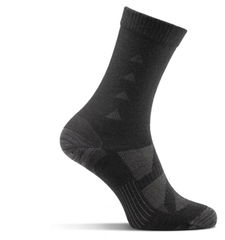

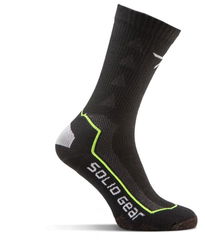
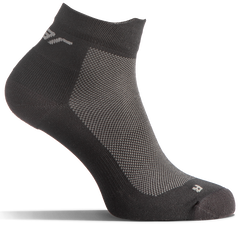
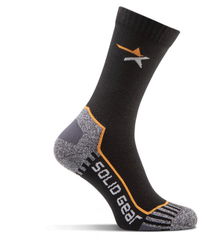
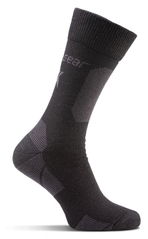
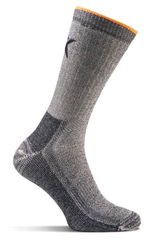
Not found what you were looking for?
We are happy to help you find the right product.
What are Solid Gear work socks?
Solid Gear work socks belong to the functional accessories for work and safety shoes. Unlike regular casual socks, work socks are intended for conditions in which your feet are under long-term strain. Depending on the model, certain zones may be extra reinforced, elastic, or padded. Think of the heel, toes, sole of the foot, or the area around the instep. The material structure can also be tailored to wicking away perspiration and limiting moisture accumulation in the shoe. Always check the product specifications, because not every Solid Gear sock has the same composition or properties. Moreover, work socks are not independent personal protective equipment. They do not replace a safety toe cap, penetration-resistant midsole, or slip-resistant outsole and do not change the certification of your safety shoes. However, a suitable pair can help the foot fit better in the shoe. This makes good work socks a practical addition to Solid Gear work shoes, especially when you walk, stand, or make varying movements daily.
Comfort and moisture management during various activities
During physical work, your feet produce heat and perspiration. When moisture is not sufficiently wicked away, the inside of your work shoes can feel clammy and the chance of skin irritation or friction increases. Depending on their material and construction, Solid Gear work socks can contribute to moisture transport and ventilation. This is relevant for professionals in logistics, warehouses, installation, construction, production, transport, and technical services, among others. The work environment also plays a role. In a heated indoor space, a lighter, well-ventilating sock can be pleasant, while outdoor work at low temperatures may require a warmer version. Do not base your choice solely on the season: the insulation and ventilation of your shoes, the duration of the activities, and your personal perception of warmth are equally important. Change damp socks in time and let your work shoes dry well after use. A well-thought-out combination of sock and shoe supports a more pleasant foot climate, but does not automatically prevent all perspiration or pressure complaints.
Choosing the right size, thickness, and fit
A suitable work sock fits evenly around your foot without pinching, sliding down, or forming creases. Creases and excess material can cause pressure points and extra friction in a work shoe. Therefore, check which shoe sizes correspond to the chosen sizing of the Solid Gear work socks. If your shoe size is on the border between two sizes, also pay attention to the elasticity and size chart of the specific product. The thickness of the sock also influences the available space in your Solid Gear work shoes. A padded or winter sock takes up more volume than a thin version and can make a tight-fitting shoe too tight. Therefore, preferably try on your shoes with the type of work sock that you actually wear during work. Pay attention to sufficient room for movement at the toes, a stable heel, and the absence of pressure around the instep. If necessary, wear the same sock thickness on the left and right, so that the fit and support remain comparable on both feet.
Choosing, using, and maintaining Solid Gear work socks
When choosing Solid Gear work socks, it is wise to first assess your daily conditions. Determine whether you mainly work indoors or outdoors, how much you walk, and whether you get warm or cold feet easily. Then check the material composition, length, size, and any reinforced or ventilating zones for each version. The shaft height of your work shoes is also relevant: the sock should be high enough to limit direct contact and chafing along the shoe edge. Good maintenance helps to maintain the shape and functional properties for as long as possible. Therefore, always follow the washing instructions on the label and take into account the permitted temperature and drying method. Replace socks when the elastic slackens, the fabric becomes thin, or holes appear at the heel or toes. Worn material may not fit as well and offers less cushioning against friction. With multiple pairs, you can wear clean, dry work socks daily and let each pair dry completely in between.